2026年07月03日
Transforming sidestreams into jet fuel
The aviation industry wants to use more sustainable aviation fuel, but supply is limited. To meet demand and secure cleaner air travel, suppliers need to unlock resources from existing sidestreams like fats and oils. How to scale up? That’s where GEA comes in.
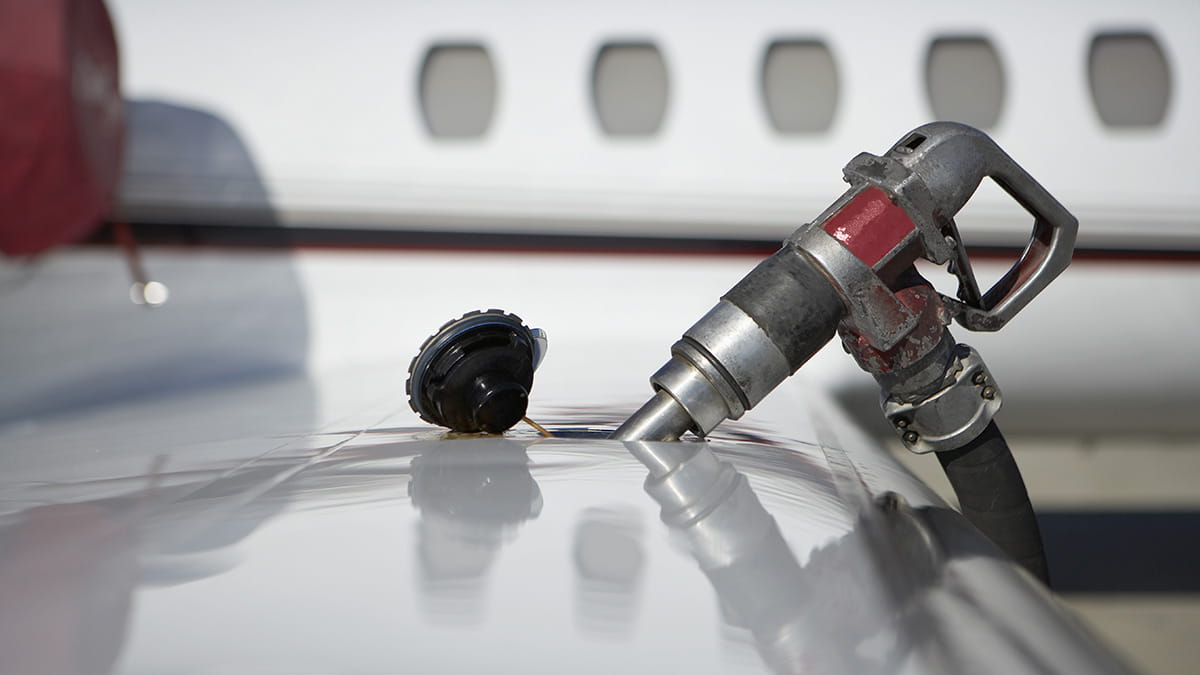
Aviation is one of the toughest sectors to decarbonize yet one of the most urgent. With global air traffic expected to continue rising, the industry faces a critical challenge: how to drastically reduce emissions while maintaining global mobility.
Sustainable aviation fuel (SAF) is widely recognized as the most viable solution in the near to mid-term. Yet scaling SAF production is not simply a question of technology. It is a question of resources. Where will the enormous volume of more sustainable feedstocks required to fuel this industry come from?
The answer to this challenge is simple: We must make better use of what already exists rather than rely on new resources which create further challenges for people and planet.
Across diverse industries, oils and fats are found in processing sidestreams, residues and waste flows that have long been underutilized or discarded. Today, these materials are emerging as a crucial foundation for the future of air travel. By combining advanced separation technology with deep process expertise, GEA helps transform waste into a strategic resource, enabling a more circular pathway to SAF.
Closing the gap between ambition and reality
Aviation currently consumes around 300 million tons of jet fuel each year, while the global supply of potential bio-based feedstock is significantly lower. And only a fraction of that bio-based feedstock is used for SAF today.
At the same time, regulatory frameworks like the EU’s Renewable Energy Directive accelerate demand. While the directive sets clear targets for SAF blending in the decades ahead, the result so far is a widening gap between ambition and available resources.
To close this gap with less impact on the planet, suppliers must expand beyond conventional feedstocks. For example, edible oils like soybean, palm and rapeseed have played a role in early biofuel production, but they come with their own planetary pitfalls in terms of land use and food security.
The future of SAF depends on alternative sources – materials that do not compete with food systems and are already present in existing value chains.
A new perspective: valuing waste
Waste oils and fats are rapidly becoming the most promising category of future feedstocks. Used cooking oil (UCO), grease trap waste and residue from food processing and vegetable oil refining offer clear advantages: They are widely available, often underutilized and inherently more sustainable.
Already, more than 10 million tons of used cooking oil are repurposed annually for biofuel production – a figure that continues to grow – just not fast enough.
Encouraging more consumption of deep fat fried food is of course not the solution to the supply issue. Beyond established sources lie an even greater opportunity: industrial sidestreams from palm oil mill effluent (POME), palm fatty acid distillate (PFAD), spent bleaching earth oil (SBEO) and distiller’s corn oil. Significant volumes of these recoverable oils are lost every day as a result of food and chemical processing.
But this is beginning to change. What was once considered waste is now recognized as a valuable feedstock – provided it can be efficiently recovered and processed.
Engineering that unlocks complex feedstocks
Recovering oil from sidestreams is not a trivial task. These materials are often highly variable in composition, contaminated and difficult to process. The quality of used cooking oil alone can vary dramatically, depending on how it was produced and handled. Impurities may range from a few parts per million to several hundred.
To address this complexity, GEA combines robust centrifuge technology with tailored process design. Centrifuges – long established in oil and water separation – are adapted and optimized to handle modern feedstock challenges, enabling efficient separation of oil, water and solids even under demanding conditions.
Equally important is application expertise. Each feedstock requires a specific approach. Pretreatment which includes breaking down emulsions may be required. Chemical composition, contamination levels as well as the desired end use must also be taken into consideration.
De-risking oil recovery innovation: from lab to large scale
Turning complex sidestreams into reliable feedstocks requires rigorous testing, validation and scale-up. GEA’s Process Test Center (PTC) for Separation and Process Development provides the ideal setup for each of these steps.
Located in Oelde, Germany, the PTC is a global hub for separation expertise, where laboratory analysis, pilot testing and full process development come together under one roof. With more than 12,000 tests and 25,000 product analyses completed to date, the site provides a unique knowledge base for tackling even the most challenging applications.
At the PTC, feedstocks are analyzed for their physical and chemical properties. Engineers then run centrifuge trials under real-world conditions to simulate factory performance, optimizing everything from machine selection to complete process design.
This structured “test before invest” approach reduces risk, accelerates implementation and ensures that solutions are both technically and economically sound. From initial feasibility assessment to full-scale deployment, customers benefit from reliable data, expert guidance and proven process concepts.
From byproduct to business model
The increased use of sidestreams to create biofuels is made possible through advanced processing technology. However, to really increase the supply a shift in business strategy is required as well.